

From Permanent to Contract: Which Hiring Model Suits Your Business?
- July 24, 2026
- Share
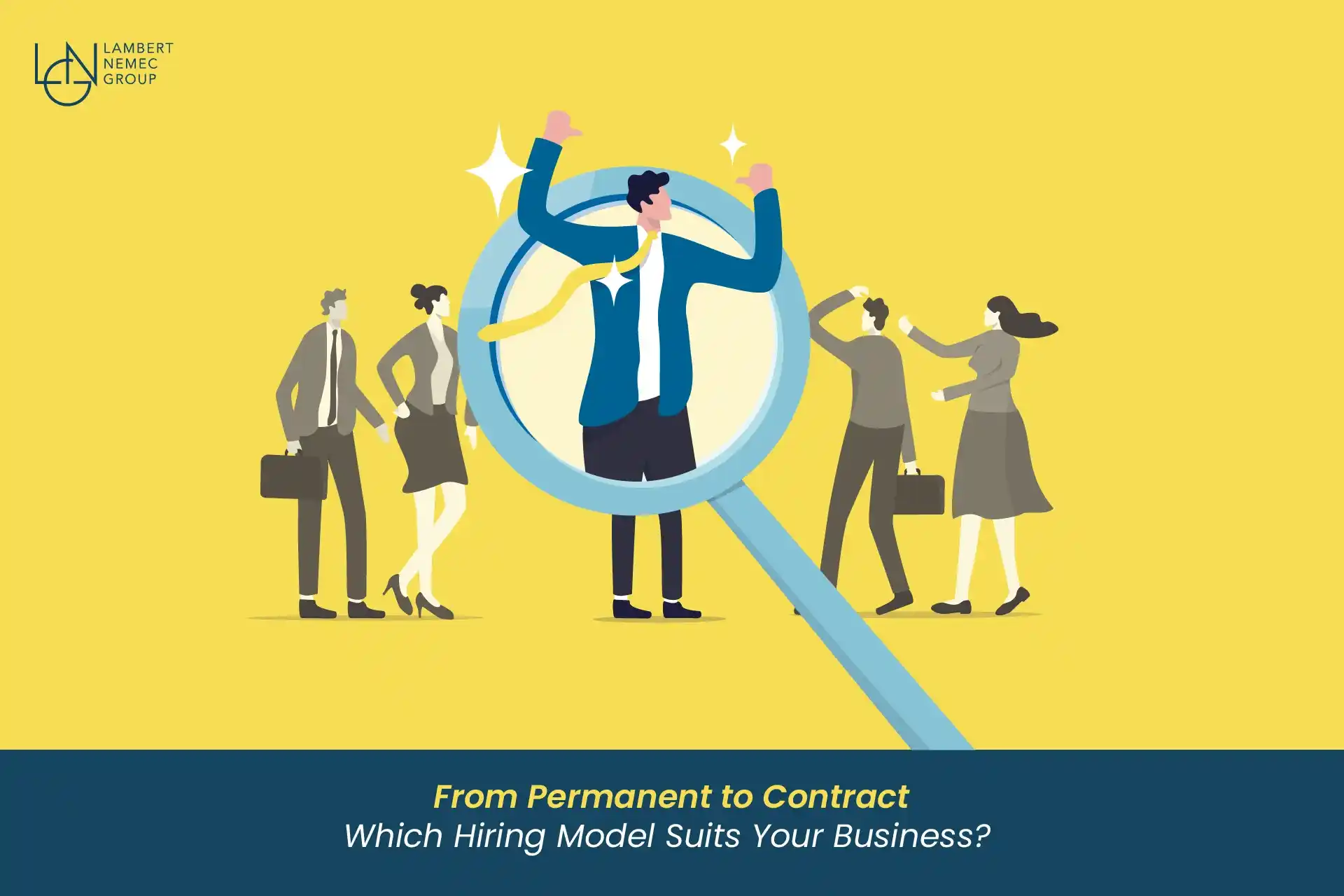
Hiring practices by Canadian businesses have undergone significant transformations over the last several years. Today, with the uncertainty in the economy, changing expectations from the workforce, remote working becoming the norm, and a lack of talent in certain industries, companies are seeking a different approach to team formation. It is no longer a question of how much, but of how to hire smartly for many employers.
On the other hand, permanent staffing offers the company long-term security and value. In the meanwhile, companies seeking speed, flexibility, and specialized knowledge are increasingly turning to contract staffing. Both models have advantages, but choosing the wrong one could result in operational inefficiencies, cultural disparities, or even needless expenses.
Sometimes the decision to hire a person is not based on how many employees the company has but rather on the direction in which the business is going.
Understanding the Shift in Canada’s Hiring Landscape
The Canadian labour market is constantly adapting to the progress of technology and employee preferences. Whether it’s in finance and accounting, IT or operations, businesses everywhere are finding the challenge to be balancing long-term workforce development with agility.
There are a lot of companies that are now working in a hybrid setup with permanent employees and contract employees. This allows businesses to keep their organizations intact and adjust to project needs and changes in the market.
For instance, a technology startup in Toronto that is growing might need to hire permanent management staff to lead the company’s culture and strategic development, and at the same time, engage contract developers to complete a software implementation project that requires more time in the short term. Likewise, an accounting firm in Winnipeg can hire temporary staff during tax season and not increase its permanent employees.
Hiring is moving from transactional to strategic.
Why Permanent Hiring Matters
Many successful organizations have permanent employees as their cornerstone. They do not just perform their duties, but also help build the company culture, knowledge, leadership, and sustainability.
- Building Organizational Continuity
The biggest benefit of permanent hires is continuity. As workers stay at a company for longer, they gain more knowledge about the inner workings, client relationships, workflows, and objectives of the firm.
During growth or transition times, this institutional knowledge is of greater and greater value. Businesses that have a longer tenure of employees are likely to have better collaboration, communication, and consistency of operations.
- Strengthening of Culture and Retention.
Permanent workers are also more inclined to put their hearts into the company’s performance. They are involved in the workplace culture, mentoring, leadership development and long-term planning programs.
Short-term staffing is not enough to develop a strong internal culture. Companies that focus on employee development, inclusion, and engagement tend to have more staff retention and satisfaction.
This is important in the modern workplace in Canada, where employees have come to expect:
- stability
- professional development
- work-life balance
- meaningful workplace culture
- transparent leadership
Businesses lacking these aspects will likely have difficulty attracting the best talent, including high salaries.
Issues with Permanent Hiring
However, there are things to take into account when it comes to permanent hiring.
While the recruitment process can be longer, the investment in the onboarding process is larger, and companies must invest more into the long-term salary, benefits and training. The wrong permanent employee can also lead to cultural disruption, which is more than just a productivity issue.
During times of uncertainty in the economy, organizations might be reluctant to invest in long-term growth without a good long-range forecast.
Why Contract Staffing Continues to Grow
The role of contract staffing has grown from its previous image as a mere band-aid and has become a much more dynamic and exciting service. Today, contract professionals are important in assisting companies to stay flexible and competitive.
Contract hiring is becoming more of a proactive recruiting approach in many industries in Canada.
The Flexibility of Changing Markets.
Many organizations have opted to have leaner operational structures, especially due to the economic uncertainty. Contract employees offer flexibility without the long-term obligations that come with permanent work.
This can be particularly beneficial for:
- seasonal workload increases
- project-based initiatives
- temporary leaves
- digital transformation projects
- rapid scaling periods
- specialized technical work
For example, a company that is adopting a new ERP system might need expert project consultants for six months, but after that. Staffing for short-term operational requirements with permanent personnel may not always be efficient for the business.
Having Access to Specialized Expertise.
Employers can also find highly specialized workers through contract staffing, which might not be found in standard permanent staffing.
This is especially prevalent in:
- cybersecurity
- cloud infrastructure
- financial analysis
- executive project management
- AI implementation
- compliance & risk management
In many situations, organizations require high-level knowledge in a hurry. Contract staff can sometimes fit in more quickly into a project as they are used to adapting to new environments.
This velocity can be a competitive edge for businesses with critical skill gaps.
Operating Efficiency and Cost are Major Concerns.
Contract hiring could also offer higher flexibility and more money. Employers may make use of resources only when needed for a project and not be held liable for the increase in their workforce for the entire year.
Contract staffing is not always “cheaper,” though. If the professional is more specialized or is only available on a short-term basis, they may charge more per hour. The key is in targeting efficiency, not just cutting costs.
When Permanent Hiring Makes More Sense
When companies are looking to:
- Long-term expansion
- leadership development
- succession planning
- customer relationship continuity
- corporate culture development
- operational consistency
Permanent recruitment is best for companies looking for staff who will also grow with the company.
For example:
A firm in growth mode that is developing future leadership pipelines.
A health care organization that emphasizes stable patient relationships.
An industry that demands a reliable understanding of the business
A startup with long-term product teams.A startup with long-term product teams.
In these instances, hiring permanent workers is a strategy for stability and scalability.
When Contract Staffing Is the Better Fit
Companies can get effective contract staffing where they need:
- immediate expertise
- leadership development
- project-based support
- operational flexibility
- reduced long-term commitments
Examples include:
- Projects for Short-term IT Modernization.
- maternity leave coverage
- economic uncertainty
- Mergers and Acquisitions
- temporary compliance initiatives
- peak seasonal demand
The Rise of Hybrid Workforce Strategies
Many Canadian companies are adopting a hybrid approach to staffing, pairing both of the above to achieve a well-rounded team.
This blended strategy enables businesses to:
- Ensure strong core teams.
- scale efficiently
- reduce burnout
- improve workforce adaptability
- Have the opportunity to access special expertise as needed
For instance, a business can have leadership throughout the year as well as contract analysts during the year-end reporting. Companies that are going through a Digital Transformation process, for example, might have permanent teams of operations staff, but temporarily increase technical support staff.
The Right Hiring Model for Your Business
There isn’t a single winner in the permanent vs. contract hiring battle. The best staffing plan is determined by:
- Business objectives
- industry requirements
- operational structure
- development stage
- financial forecasting
- workforce priorities
Employers should consider the following before hiring:
- Is this necessity a short-term need or a long-term need?
- Are you required to be embedded in an organization in order to be effective?
- What is the time frame for the job to be filled?
- Do special skills or training need to be acquired?
- Will this role be a long-term leadership development opportunity?
- How flexible is the business at this time?
Deliberate hiring decisions don’t occur in isolation. They come from a realization of the present need in the business and a vision for the future.
Final Thoughts
In today’s Canadian workforce, there is more to hiring than just filling positions. It’s about creating flexible, resilient and strategic teams.
Permanent staff members can offer stability, continuity, and cultural roots. Contract professionals provide flexibility, expertise, and agility. Depending on the business goals, either model can be a valuable business solution.
The best workforce plans are seldom formulaic. They develop in response to the realities of business, economic factors, and organizational priorities.
If you are in a continuous search for the right hiring strategy for uniform growth, Lambert Nemec Group can help you evaluate today`s evolving workforce landscape and provide with recruitment solutions customized to your business needs.
Table of Contents
Recent Post


The Right Hire Begins with the Right Diagnosis: The Black Box of IT
September 11, 2026
The Questions That Stopped an IT Hiring Decision in Its Tracks
September 4, 2026