

IT Leadership Archetypes (Part 1): Why the Wrong IT Leader Can Stall Business Growth
- October 16, 2026
- Share
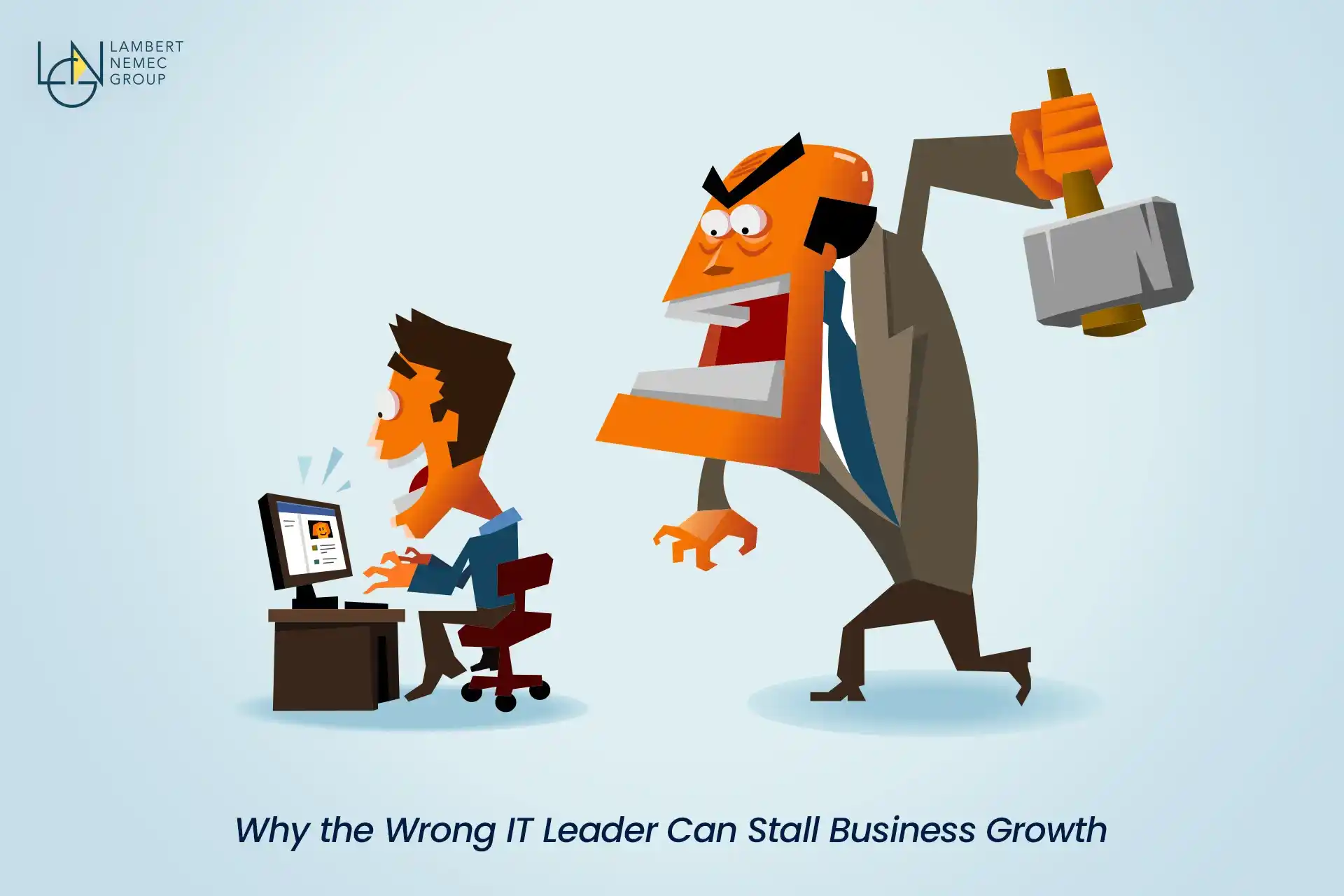
They hired a new Director of IT. In theory, it was a good choice. In reality, it was the wrong model for the organization it was in.
When the Director of IT quit after just four months at a scaling Winnipeg company, it led Lambert Nemec Group to the organization. Leadership was baffled. The candidate’s credentials were excellent: enterprise experience, great references, and their employers were well known. All the signals were favourable. But it was an instant fit that was lost.
Examining the situation, Lambert Nemec Group’s team found that it wasn’t the candidate’s ability that was the issue. It wasn’t the wrong man. Their leaders were not of the right archetype.
A Mismatch, Not a Failure
The organization required a builder. A person who loves ambiguity and is able to stand up systems, build infrastructure when there is none, wears several hats at once and develop processes when they don’t exist.
Rather, they employed an enterprise maintainer, a leader whose entire career had been geared toward governance, mature teams, systems already in place, and a predictable business environment and large, approved budgets.
The leader was not weak, far from it. However, the operating environment required a wholly different approach to one which this person had developed over the years. After four months, the discrepancy was too big to overlook, and the resignation ensued.
This is the core idea behind IT leadership archetypes, and it’s the foundation for this new sub-series within our ongoing Black Box of IT track.
Why Titles Tell You Almost Nothing
The role of Director of IT is not a role description. You can have two people with the same job title in two different companies, and they could be working on completely different tasks. You could create a new technology role from scratch. The other may have a well-established environment with a big team already.
The only good IT leader is in the right environment. This isn’t a statement about talent. It’s a message of alignment. Every leadership type thrives in certain business environments, and no one type is necessarily better than another.
The most valuable hire is the one whose skills complement the current state of the company, not the state it was two years ago, or the one it should be five years from now. It’s simple to say, and difficult to remember during a hiring process that’s centred on résumés and phone calls for references.
An Introduction to IT Leadership Archetypes
Different organizations at varying stages of business maturity, technology maturity, or internal process maturity will require different types of IT leaders. There are some common themes that we find throughout our search work:
The Builder thrives in ambiguity, creating infrastructure, process, and team structure where little previously existed. Early-stage and rapidly scaling companies often need this profile most.
The Scaler takes a function that already has some groundwork and lays out the groundwork for significantly greater volume, user count, or complexity without disrupting what already works.
The Optimizer aims to focus on efficiency within a largely completed structure, collate processes, eliminate waste, and enhance performance indicators.
The Enterprise Maintainer is comfortable in governance, in well-established teams, and in predictable and well-resourced environments. This is frequently the type of business that comes to mind when businesses envision a senior IT leader, despite not necessarily being their immediate needs.
The Transformer is introduced to make a change: to transition away from legacy systems, to pivot strategy, or to reimagine technology as a business value provider and not a cost center.
The rest of this series will examine each of these archetypes individually, the warning signs that are indicative of which one your business actually needs, interview questions, and the organizational conditions. At this point, the only thing that’s important is to acknowledge that these differences do exist and that they are significant when it comes to making a hiring decision.
Warning Signs of an Archetype Mismatch
There are a few common themes that indicate that the company is likely to repeat the same errors as Winnipeg above:
- Hiring made more by the name of the individual than by the day-to-day requirements of the job.
- Assuming that enterprise experience automatically translates into comfort with ambiguity and early-stage building
- Prioritizing technical depth over leadership style and organizational fit
- Overlooking the company's actual level of process and technology maturity
- Expecting a single leader to simultaneously build, scale, optimize, and maintain
Each of these on their own can quietly sabotage a good hiring process. Together, they’ll probably assure you another costly exodus.
Getting the Assessment Right
This is not to say that the experience or qualifications are unimportant. They do. They are answering the wrong question that most hiring processes are seeking to answer. Credentials are statements about what someone has accomplished. Archetype fit indicates whether they are capable of doing it here, in these conditions and at this stage of growth.
Lambert Nemec Group has seen this trend play out in every discipline and size of business within the Winnipeg market, as well as across all of Canada and the world. It’s not usually a competence issue. It’s invariably a “fit” issue, hiding behind an impressive résumé.
Is Your IT Leadership Built for Where You Are Right Now?
At some point, every organization will ask itself a similar question: “Is our existing (or proposed) IT leader fit for today’s stage of our business?
It’s worth sitting with that question honestly before the next search begins, whether you’re replacing a Director of IT, hiring your first CIO, or evaluating whether your current leader is positioned to grow with you. To get an objective, experienced opinion on that question, Lambert Nemec Group’s IT executive recruitment team is more than happy to discuss it with you.
Table of Contents
Recent Post


How the Job Market Affects the Recruitment World
Published on:

Attracting Talent: How to Compete with the Big Firms!
Published on: